
Disclosure: This is a guest post from Nikhil Pai, founder of Chronicle. Superinsight and Chronicle are independent companies that share a commitment to helping disability law firms work more efficiently.
Introduction: Why Missed ERE Updates Happen More Than Firms Realize
Most disability firms invest in tools such as Superinsight to speed up medical record review and hearing preparation. When evidence is complete and organized, those tools can dramatically reduce prep time and improve outcomes.
But even the best review workflows quietly break down when evidence doesn't arrive consistently. Missed ERE updates cap the upside of every downstream system, often without firms realizing it.
Those misses aren't a staffing issue. They stem from how the Social Security Administration posts evidence and how firms are forced to monitor it. Evidence appears unpredictably at odd hours, in clusters, or after internal backlogs clear, making once- or twice-daily checks leave long windows where updates land unseen.
The result is silent delay. Documents sit in the ERE until someone notices a mismatch, often late in the case lifecycle. Mail doesn't fill the gap: it's slow, inconsistent, and rarely aligned with deadlines.
In this post, we'll break down why missed ERE updates are systemic, how they undermine even strong review workflows, and the only fix that works at scale: removing manual vigilance from evidence intake entirely.
The 5 Core Reasons Disability Firms Miss ERE Updates
Talking with hundreds of disability firms, the main reasons we find their teams miss ERE updates boil down to:
- Manual checks are inconsistent. Staff rely on remembering to log in, and ERE checks drop during call spikes, hearings, or heavy prep. Shared devices and MFA codes slow access and make routine checks easy to skip.
- High context switching leads to misses. Teams juggle calls, hearings, claimant follow-ups, and internal tasks. Switching between these breaks attention. The American Psychological Association found task switching can cost as much as 40% of productive time!
- SSA posting is irregular. Evidence arrives at off-hours, in clusters, or after backlogs clear. Fixed schedules for checking the ERE miss what lands between.
- Firm systems are fragmented. Evidence shows up in the ERE, inboxes, fax queues, and local folders with no coordination. Staff must mentally reconcile multiple sources to know whether a case is truly up to date.
- There's no audit trail. Firms can't confirm who checked ERE or when. Misses repeat because there's no visibility into gaps, patterns, or accountability.
The Operational Fallout When Updates Are Missed
When you miss ERE updates, your entire disability firm's workflow is impacted. There are three simple reasons why:
Attorneys lose the ability to stay ahead. A document appears in the ERE but isn't integrated until days later. Suddenly a deadline is tighter than expected, a hearing packet is incomplete, or a client calls with questions the firm isn't prepared to answer. What should be proactive work becomes reactive cleanup.
As one of our partner firm owners, Will Viner, of Viner Disability Law shared with us: "We would receive calls from our clients telling us they'd been approved or denied. That doesn't look very good professionally."
Staff workflows get overloaded. Late-discovered uploads lead to doing work that's already been done again; whether that's tasks reporting, refiling documents or re-reviewing timelines. These interruptions overbook already full days and push other cases off track.
Case timelines drift. Every missed update delays downstream steps: reviewing evidence, requesting supplemental records, preparing claimant summaries, organizing exhibits. These slips accumulate quietly until they become visible to the client, like in the example from Will Viner.
Hearing preparation weakens. When evidence arrives but isn't incorporated early, attorneys lose critical time to build arguments, identify gaps, and prepare their claimant with the full record. There are ways to improve this process though using intelligent medical record review.
Combined altogether, these impacts create a drag on the entire operation. A single overlooked ERE update rarely feels catastrophic, but across dozens or hundreds of cases, the friction becomes unavoidable and expensive.
How to Fix Missed ERE Updates Permanently With Chronicle
The patterns that cause missed ERE updates aren't fixable with more reminders, tighter staff oversight, or adding another daily check.
They're structural problems rooted in how evidence lands and how fragmented the system is. The only reliable fix is replacing manual vigilance with continuous, automated monitoring software.
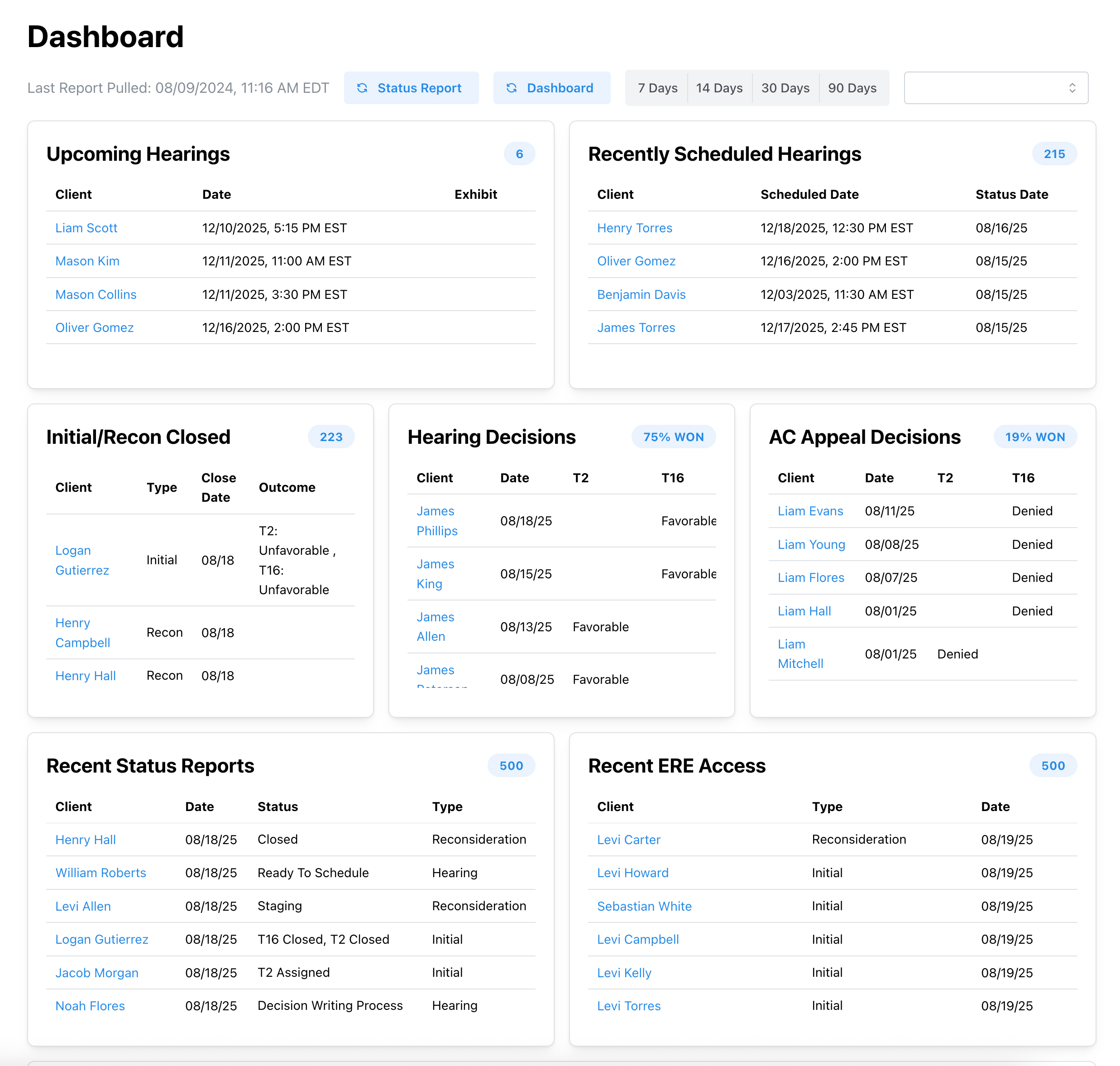
Chronicle is a persistent ERE monitor that watches for updates around the clock.
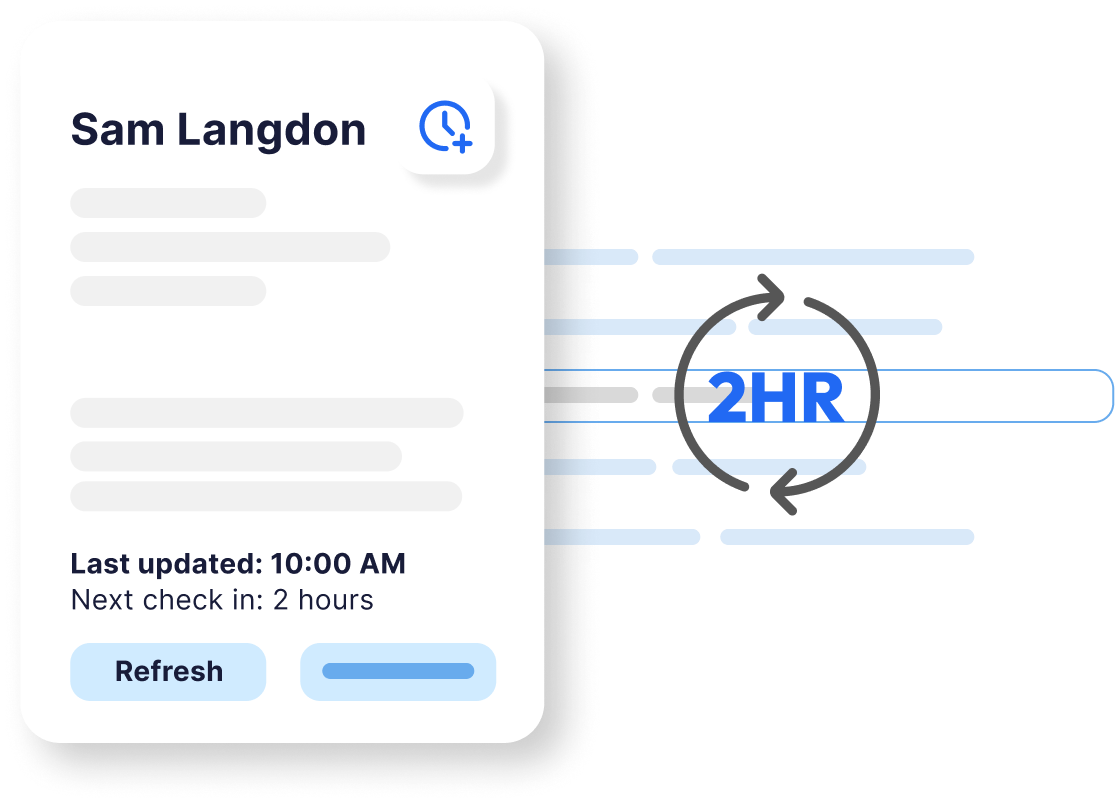
Whenever the Social Security Administration posts new evidence, whether at 2 PM, 7 PM, or in the wee hours of the morning, Chronicle captures within two hours.
There's no dependence on staff availability, no gaps between checks, and no missed uploads because someone was in a hearing or handling claimant calls.
Every document is automatically routed into the right case.
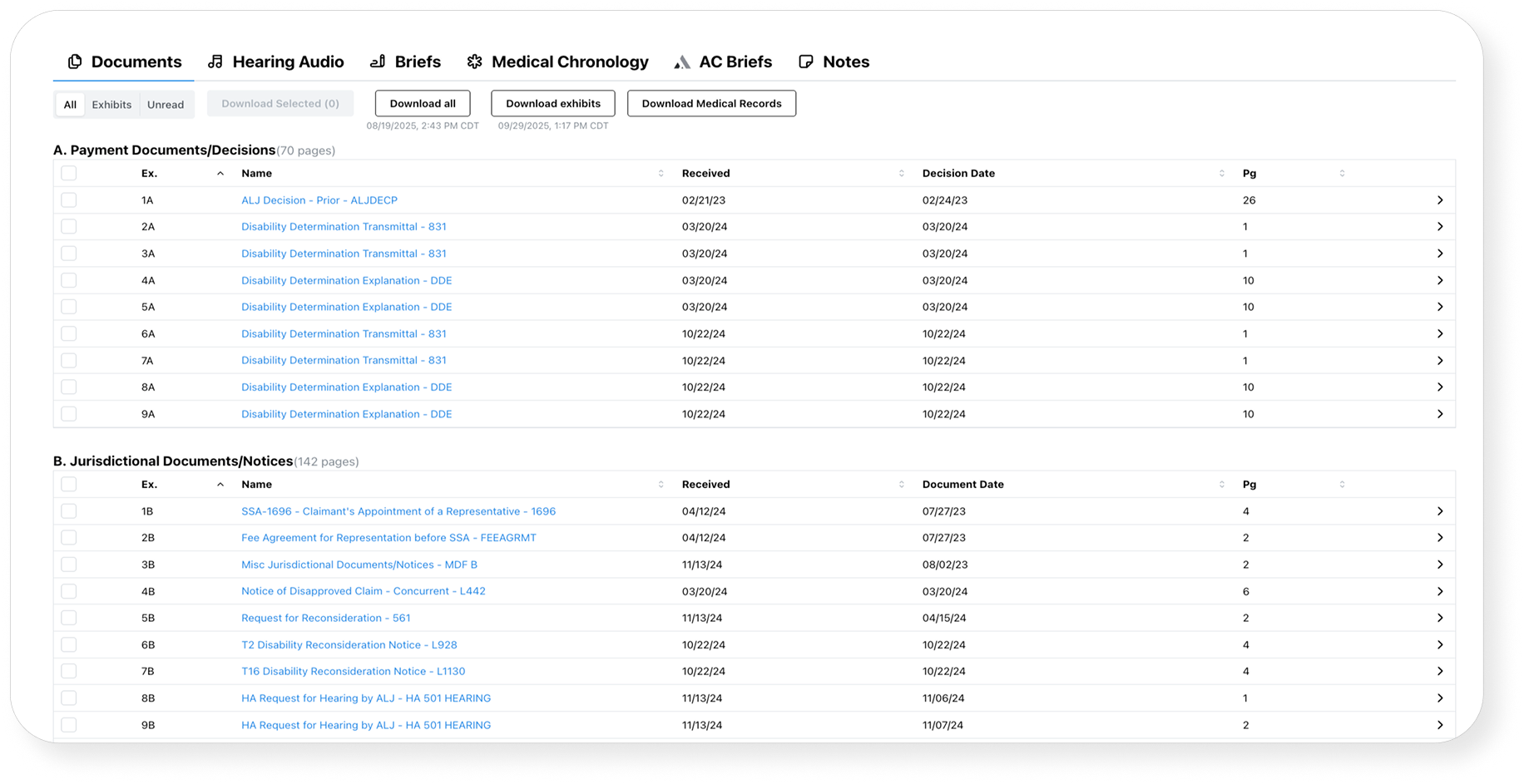
Firms get the same organized structure they already are used to when they log into the ERE: consistent naming, familiar folders, and evidence slotted exactly where attorneys expect it. This eliminates the mental load of reconciling the ERE, inboxes, and local drives.
This leads to huge time savings of anywhere from 50 to 75% of a paralegal's bandwidth.
When disability firms adopt Chronicle, a unified audit trail replaces guesswork. Firms can see exactly when evidence landed, how it moved through the workflow, and who did what at the firm. There's no ambiguity or blind spots since users at all levels from attorneys to staff can customize their notifications.
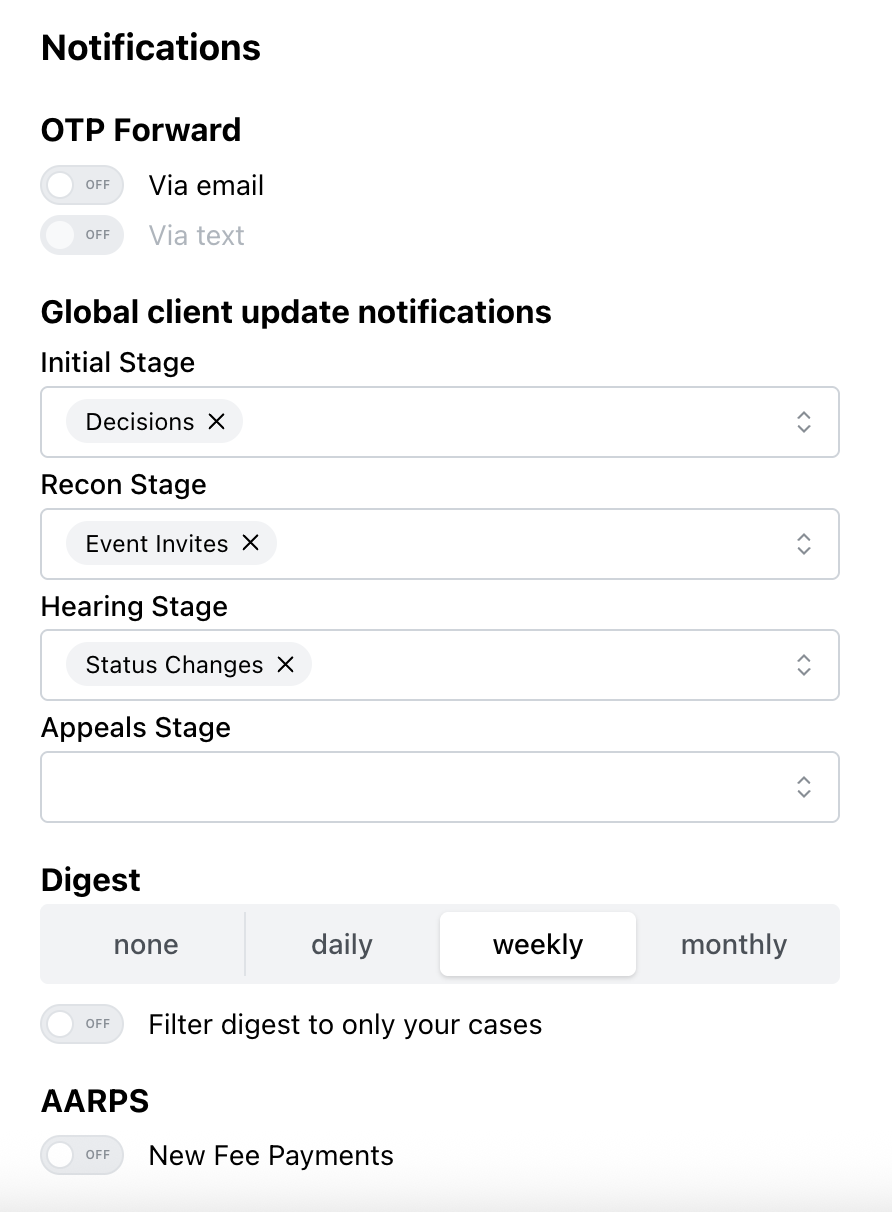
By stabilizing the entire evidence flow, Chronicle removes the human failure points that make missed updates inevitable. Instead of reacting to surprises, firms operate from a complete, real-time picture of every case, every day.
How Downstream Hearing Prep Tools Fit In After Intake Is Fixed
Tools like Superinsight reach their full potential when the evidence intake layer is stable. Chronicle creates that foundation by producing clean and consistently organized evidence files. When every document is captured automatically, named correctly, and placed in chronological order, downstream review becomes dramatically faster and more accurate for disability attorneys.
When intake is standardized at the source, downstream review changes entirely. Attorneys aren't hunting for missing uploads or reconciling inconsistent file structures. Instead, they can immediately trust the inputs, allowing Superinsight to do what it was designed to do: rapidly analyze medical records, surface key findings, and accelerate decision making with confidence.
Without this intake layer, firms hit a scaling ceiling. Missing documents, delayed ERE uploads, and manual cleanup force staff to spend hours fixing inputs before insights can be generated, often erasing the time savings promised by analytics and AI. Growth then requires more people, more rework, and more risk.
Together, Chronicle and Superinsight function as a unified system. Chronicle continuously monitors ERE sources and structures each case file in real time, ensuring nothing slips through the cracks. Superinsight then amplifies that structured data, transforming complete and reliable records into faster reviews, clearer medical chronologies, and actionable insights.
In tandem, Chronicle stabilizes the front end of the case, and Superinsight scales the intelligence that comes after it.
The result is a modern disability-firm operating model, one where firms can take on more cases, move them faster, and maintain quality without increasing manual burden.
How High-Performing Firms Operate Once the Intake Problem Is Solved
Once Chronicle stabilizes evidence intake, firms shift into a more predictable operating rhythm. With zero missed updates, staff stop chasing surprises. Evidence lands automatically structured and is ready for review without clerical cleanup.
Attorney time moves toward strategy instead of discovery. Instead of hunting through scattered folders or learning about evidence days later, they focus on what the record means and what still needs development.
Staff feel the difference too. In case studies across Chronicle's customer base, teams report stronger collaboration because everyone works from one complete, real-time record.
That stability directly impacts throughput.
Tony Ficek shared that after adopting Chronicle, his team saved 10–20 hours per week, improved hearing approval rates, and grew revenue by 67% year over year as capacity increased without added headcount. Similarly, The Disability Champions scaled from 900 to 3,000 active cases by removing intake bottlenecks rather than expanding staff.
This is what high-performing disability firms look like once intake is fixed: calm workflows, aligned teams, and growth driven by system reliability, not constant firefighting.
Wrapping Up: What to Do Next
Now that you know why SSD firms miss ERE updates and what to do about it, the solution becomes simple: automate the parts of the workflow humans cannot reliably perform and standardize everything that follows.
Here's a quick set of steps you can take to move from reactive to predictable:
- Turn on continuous automated ERE monitoring. Replace manual checks with a system such as Chronicle that captures updates the moment SSA posts them.
- Centralize and standardize evidence intake. Ensure every document lands in the same structured, chronological format so attorneys and staff operate from one complete record.
- Tie triage workflows to new evidence. Let new uploads automatically trigger review, follow-ups, and next steps to keep timelines tight. Using an ERE monitoring solution with a custom API makes this meaningfully easier to pull off.
- Layer downstream review tools once intake is stable. Medical chronology tools such as Superinsight are most powerful when Chronicle has already eliminated misses and organized the evidence for you.
If you want to see what implementing an ERE monitoring software like Chronicle can do for your firm, you can start a free Chronicle trial with 15 cases.
It's the fastest way to experience what continuous ERE monitoring and structured intake can do for your workflow, and how much smoother downstream review becomes once the foundation is fixed.
Want to see how Chronicle can save you 50-75% of a paralegal's bandwidth?
Visit Chronicle to learn more or book a demo.

About the Author: Nikhil Pai is the founder of Chronicle, a purpose-built software that gives disability law firms a faster, more reliable system for case tracking, ERE monitoring, and evidence review. Chronicle replaces manual SSA workflows with automated, real-time processes that reduce delays and strengthen outcomes for claimants. Learn more at chroniclelegal.com.